
The Death Workshop
Exploring mortality and preparing myself to face death.

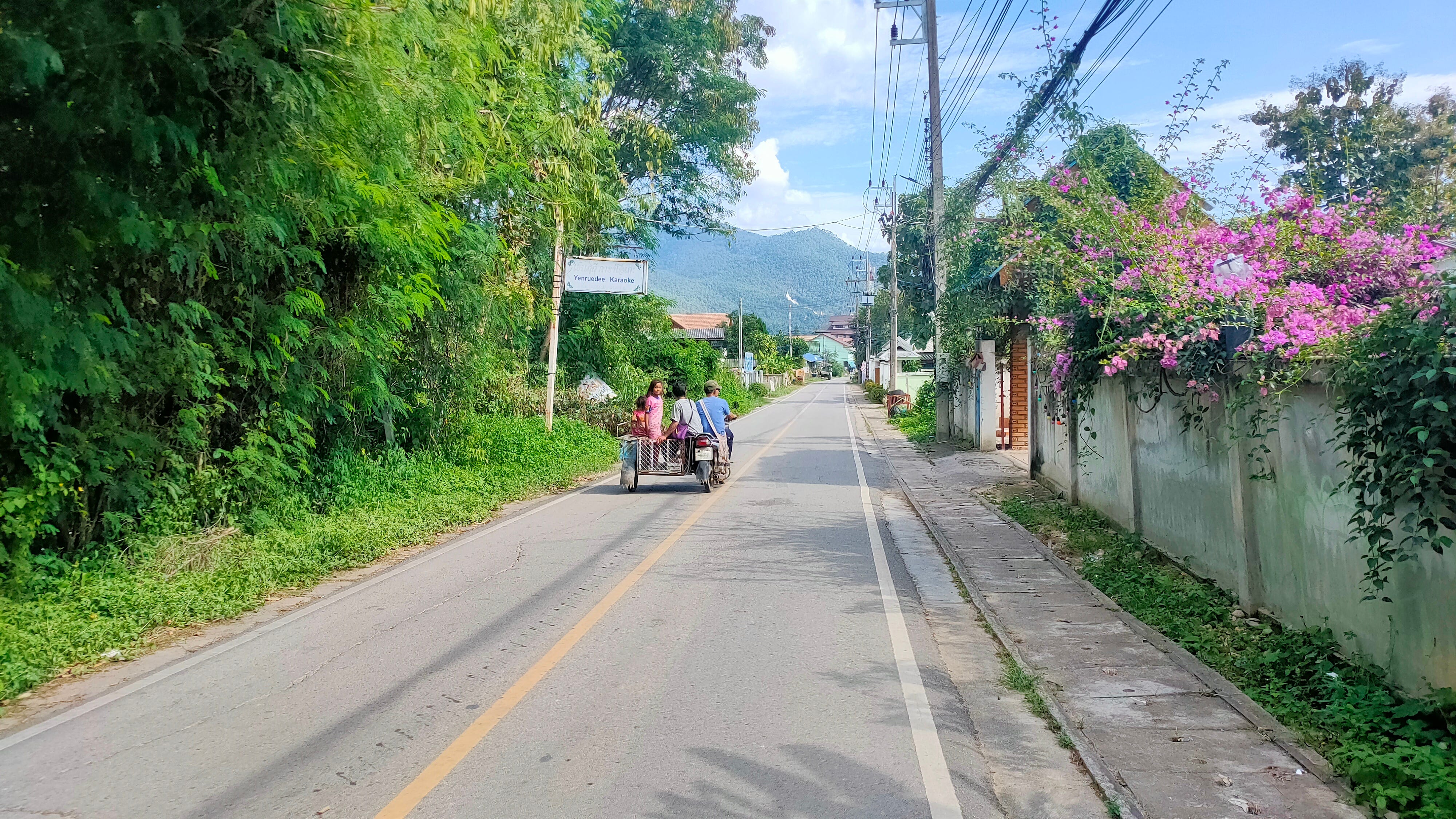
The next morning, Mia left for Vietnam and I packed all my things and went to have breakfast at the coffee shop - The Pedlar - round the corner. I was worried the mushroom experience would've left some kind of a negative residue and wanted to distract myself in a place which felt fairly comfortable. Comfy coffee shops were my second home.
I remembered the advice Sasha, an old woman from poetry club who had lived in Japan for ten years, had given me six years ago when I had walked through a glass door in Bangkok and was depressed and anxious. 'Spend an entire day at the spa!' she had commented on my Facebook post. It was good advice. I was going to attempt to spend the bulk of my day in The Pedlar, writing a blog post, researching things and talking with friends and family.
Unfortunately, The Pedlar was popular with digital nomads - every single table was taken with someone and their laptop. I dumped my backpack and suitcase next to a pillar by the counter and went to the cashier to order. When I returned, a blond girl had taken my chosen seat. A twinge of annoyance ran through me. I sat two seats down and decided to ignore her. A minute later, I asked her for the wifi password.
Her name was Anouk and she was a free-spirited 25-year-old Dutch. She had met someone a couple of months before she had started her solo travel and she thought he might be The One. She said he made her feel fearless and she was doing crazy things like dancing on tables and jumping into lakes. Between the untamed strands of wildness, I detected a youthful hint of an old soul. Anouk was leaving Pai to go to a meditation retreat halfway down the mountain. We had both come to the café to do some work but this was long forgotten as we got sucked into a conversation about travelling, boyfriends and what to do in Pai.
'There's a death workshop happening this weekend,' she told me.
'Death workshop?' My eyebrows perked up. 'What's it about exactly?'
'It prepares you for death. I know the facilitator, I’ve met her at a few events before, I know it's going to be really good.'
Having dipped in and out of the alternative community in London, I had come across workshops on all sorts of things, from crystal healing to reiki to sound baths, but I had never come across one that explored death. I was planning on leaving Pai this Friday and heading to Chiang Dao, an even smaller village, but the death workshop really intrigued me.
I messaged the facilitator, Adina, and asked if she was running the workshop earlier in the week. She wasn't and she wanted me to confirm my attendance so she knew the numbers. I hesitated. I wasn't sure how I felt about Pai after the mushroom session. Did I want to stay in this little village on the mountains? I decided to confirm my place while secretly giving myself permission to cancel if needed. It didn't feel very honest but I needed to do what was best for me to avoid a bout of anxiety.
'Can you please let me know if you have had any recent major losses in your life that would put you in early grief process?' she asked.
'No, no losses, just really curious about this and want to take control of my life/adjust and live as fully as possible. I have depression and anxiety and it has taken a lot from me.'
'Thanks for being open and transparent with me about your context, I appreciate it. You've got the workshop clearance.'
On Sunday, I didn't feel so good. Earlier in the week, I had managed to extend my stay at the hotel for an additional four days, leading me up to tomorrow. I hadn’t found a suitable, cheaper accommodation anywhere and resented the hotel price. I had spent 7,700 baht on seven nights which was around £171. This was way over my maximum budget of £150/week. The lack of a solid base made me feel insecure and this triggered mild anxiety. The ideal situation would have been a clean and comfortable place close to the village centre for an affordable rate which I could book for a few nights and keep extending as I saw fit. But it was coming to peak season and this flexibility was a luxury I did not have.
The death workshop was being held at someone's house, about a mile from Walking Street. The further away from the main road I went, the less commercial and more local the area became. A large market stood across the street, it's fruits and veg protected from the burning sun under a corrugated tin roof. It reminded me of Indonesia. The signs were all in Thai so I couldn't understand a word. I spotted a small contemporary-looking coffee shop on the corner of a street and made a note to visit it for lunch if needed. The workshop was going to be all day and it was recommended that we bought our own food.
About a month before I had left London, I challenged myself to try a 16 hour fast. The main reason was to see if my brain worked more efficiently due to reduced food intake, much of which was either processed or contained pesticides. Long-term depression and anxiety had impacted my brain - my short-term and working memory wasn't that great and I struggled to process complex information spontaneously. The GPs and psychologists I had seen over the years were unhelpful - they were quick to prescribe antidepressants even though I told them I was generally anti-pills. I hadn't practiced fasting in about eight years due to admitting to myself that I was agnostic and being inflicted with PCOS (polycistic ovary syndrome) which caused my periods to arrive more frequently. Fasting was not compulsory for a bleeding woman. But another reason was to see if I could let go of food. My days revolved around eating three meals and drinking several cups of tea. I had gained weight over the past four years. Since coming off the anti-depressants in April 2022, it became important to me to be independent, to not have crutches, especially as I had travel playing in the back of my mind. Not needing to have three meals a day liberated me from a schedule, quitting caffeine and reducing my sugar intake freed me from addiction, and coming off the antidepressants meant I didn't need to think or worry about obtaining the pills abroad or risk going cold-turkey and experiencing all the excruciating agony that came with that. I was quite proud of being a quitter - it really was an achievement. And I managed a 16 hour fast for five consecutive days. I knew I could skip lunch, or if I was hungry, just survive on a latte until dinner time.
Google map bought me to a private front garden that led to a small house. Shoes lay scattered around the wooden front porch steps where a couple of women stood and smiled at me. There was small talk for a while. Anouk arrived and gave me a hug. She had just returned from her meditation retreat and was hanging out in Pai for a few days before heading off to Vietnam.
A short, slim man with dark hair, probably in his forties, joined us and hugged everyone one by one.
'Would you like a hug?' he asked.
I had no idea who he was. 'Sure,' I said. He held me for a few seconds.
The lack of a home, or at least some kind of a base, often made me feel uneasy. I spent 2021 travelling along the south coast of England. At the time, I had yearned to travel internationally but didn't feel confident due to the UK (and the rest of the world) being in and out of lockdown so I thought I'd explore the country I had grown up in. I knew London but I didn't know England. The first five months were great, the novelty of a new place kept me preoccupied. The three months I spent in Brighton, living alone in a cute little rustic house at the edge of Hove, only a five-minute walk from the field that led to the South Downs, was the last time I felt at peace. When I reached Portsmouth, month six or seven of my travel, there was a subtle shift. I was still on antidepressants at the time but a small sense of something like purposelessness weaseled its way in me - and I don't think it ever left. A year later, I moved back into my mum's house and the lack of grounding had grown. On a really bad day, I felt like a small bird caught in a wicked storm at sea, desperately searching for a rock to perch on and rest - just for a while - so I could catch my breath and slow my pounding heart. I thought moving back home and being around my family would help, and it did in some ways, but not in the way I needed it to the most. It was on one of those tumultuous days when this poem leaked out of me:
Given and Taken
How strange it is
To know something
And not believe it
I know I come from you
And belong with you
But I don't feel it
Somewhere along the line
The thread snapped
Fluttered in the wind
And I didn't notice
For I was too busy
Wandering
And now I'm here
Sleeping down the hallway
Untethered
The hug from this dark-haired stranger was nourishing. I felt grounded - for a moment - until the embrace ended. His name was Yaniv and he was a co-facilitator of the death workshop. It made sense. There was something sure about himself, like he knew what he was doing and why he was here. I was the newbie to this scene.
A few more people arrived. We traipsed into a small room conjoined to the side of the house. About a dozen thin cushions lay scattered on the floor in a rough circle, a small round table sat in the corner, holding three bowls of dry snacks that looked like cat biscuits but tasted like mini rice krispie bars, a couple of jugs of water and some glasses.
Yaniv and Adina introduced themselves. Yaniv was a certified Authentic Relating facilitator and Adina, a certified death doula - someone who provided end-of-life support to dying people and their families.
Then came the rules, the main one being: no FROGGING - so no fixing, rescuing or gaslighting.
'It's also not suffering olympics,' said Adina. 'It's not about who has experienced the most pain. You can release your emotions but you need to be able to hold your own space.'
I appreciated that. Fragmented memories of various workshops floated to mind where some participants were keen to share their pain and veered off onto a monologue, taking up everyone's time.
The first activity was to partner up with someone and share how things were in our lives. I paired with a European brunette whose name I forgot as soon as I started talking.
'I'm looking for a new home,' I said. 'The quality of life in London, and England in general, is poor.' I felt the first hint of upset rouse from its slumber in my abdomen. 'And there's something about south east and east Asia that really draws me in.' Some kind of a lump formed in my throat. 'Life is richer here in many ways. I hope to find a partner and settle here.' The tears rolled out. 'Gosh, I'm sorry…' I wiped at my eyes. The brunette offered a small, sympathetic smile. I tried to stop; I didn’t want to be one of those people Sasha had referred to earlier. But the tears kept coming and my stupid nose started running. And then, something rose to the forefront of my mind. A small, perfect baby, only a day old - still - in a box. Adina had asked me if I had experienced any losses in life. How could I have forgotten her? It hadn't even been two years. How could I have forgotten Asiya? And where was she now? Grief washed over me like an unforgiving sea determined to rub salt in the wound. And the tears flowed down my cheeks like a river.
From my peripheral vision, I saw Yaniv and Adina look at me. Yaniv went into the house and returned 30 seconds later with a stack of ripped but clean tissue. I accepted gratefully. Later, I would realise the reason why I was quick to get upset was because I was staying in the hotel for a couple more days and I didn't know where I was going or what I was doing next. It made me feel vulnerable; it shook my foundation and when your foundation was weak, so was everything else. Although I was afflicted with wanderlust, what I deeply desired were stability, security and safety - a home - more than anything in the world. I didn’t have that and I didn’t know if I would ever find it. And some days, that yearning clawed at the insides of my stomach like a starving cat in a coffin, causing me to cry out or curl up in despair.
After I remembered Asiya, other family members who had died came to mind. My grandfather passed away when I was 16. His last weeks were spent hooked up to tubes in a hospital, unable to speak or eat.
'Unless associated with a disease, the body knows how to die,' explained Adina. 'It's not necessarily a medical issue but a natural one. Often, the first thing that shuts down is the digestive system. And feeding a dying person who doesn't want to eat anymore is interfering with the death process. You need to give the body the space to do what it needs to do.'
Grandpa had a tube coming out of his bellybutton. I assumed it was transporting food into him. Mum asked me to recite surah Yaa Seen, one of the chapters from the quran which I had memorised when I was nine but had long forgotten now. It spoke of resurrection and every single person being held accountable for their deeds.
'The last thing to go is usually the hearing.'
Grandpa watched me with his watery, golf ball eyes as the Arabic words flowed seamlessly from my mouth. He seemed lucid.
'Touch can be experienced differently by a dying person. Holding a dying person's hand might feel a lot heavier to them than normal. They may pull away but not be able to vocalise why they did that and this can hurt their loved ones. The best way to be with a dying person is to sit behind them and let them lean on you so there's no physical pressure on them.'
I always saw grandpa as a quiet, gentle old man, from as far back as I can remember. I never associated him with being physically strong but one of my earliest memories of him was when he picked me up out of the bathtub and wrapped me in a towel. I was six, maybe seven. My second sister and I used to love staying over because gran let us binge on Cartoon Network and junk food all day long. Grandpa used to smoke in his bedroom and gran would always complain. Although I disliked smoking, I associated the smell of cigarettes lingering in a carpeted house with comfort.
Since doing the mushrooms a week earlier, my feelings about death had changed. For the past eight years, I didn't know what to think about the existence of life and beyond and it was easier, simpler, to just not care. But the mushrooms made me experience something my mind would never have imagined. It had opened up a doorway to another dimension, a different plane of existence, and I got a taste of what it was like to be a non-human entity. I guessed a jinn but it could've been something else, something we do not know of, something our minds could not comprehend. And although I never felt sure of what happened to us after we died, I always thought the outcome - whatever that was - was always one dimensional. We went to a single place - whether that was another world, such as heaven, or we crumbled into the earth and became a part of the universe. The mushrooms made me realise there were other possibilities, many other forms of existence, many other unknowns. Would we transform and end up as a non-human being in an unknown dimension? Would we remain human but be transported to a non-human plane? How would that feel? Would we even feel anything? Maybe we’d be entities with no feelings, no thoughts, just existing. When I was high on mushrooms, I neither liked nor disliked where I was. It just felt very alien. And now that I had gotten the shrooms out of my system, I appreciated being a human and did not want to return to that space. So no more mushrooms, right? But if I was completely honest with myself, the door to trying shrooms again was still very slightly ajar - just a crack. Now that I knew of this other existence, there was a hint of fear in me. I was afraid of death and the possibility of ending up somewhere other than this earth and I didn't know what to do about it.
'You don't know how you're going to react in the face of death,' said one of the participants - an air stewardess. 'But you can prepare for it.'
'In the city, death is less visible than in rural places where our grandparents, pets or animals die,' added Adina. 'In the east and other parts of the world, like Mexico, we embrace death. But in the west, we shy away from it. If we learn to be with the unknown, we can handle the possibility of death better.'
We got into groups of four and shared something positive about someone who had passed and something that they had left behind.
My uncle came to mind. Another death I had forgotten. Dad was always cool and distant with us. He had the presence of being the man of the house but he never engaged with us, never spent any time with us. We were expected to be sensible little children around him - and pretty much all other Bengali men, although admittedly, my exposure to them was limited. But my uncle, my mum's oldest sister's husband, was friendly and jolly and made jokes with us. As a child and a teenager, I was aware it felt different but I didn't realise until later that that feeling was unusuality compared to what I had been bought up to experience and believe. Bengali men like my dad were meant to be serious and we were meant to be on our best behaviour around them, not play a cheeky game of word tennis like we did with our uncle. He showed me there was a different way for a conventional Bengali man to be. I wasn't close to him; he lived in a different city but I always liked him. My uncle passed away a couple of years ago. He was here one day and gone the next. What a strange feeling it was - a flame that warmed me suddenly extinguished.
'When we are dying, we lose our choices,' said Adina. 'We don't have much of a say in what we eat, what we look like. A death map helps us navigate that.'
An A4 sheet - titled Gifts of Mortality - containing a double-columned list of questions was handed around.
'You will die in exactly three months from now,' announced Adina. 'With that knowledge in mind, what are you going to do to prepare for your death?'
I paired up with Jane, an English woman who had married a Thai guy 14 years ago and lived in Pai. We worked our way through the questions.
'How do you feel about the news of your oncoming death?' she asked.
'I think I'm okay with it,' I replied. 'I don’t know what comes after and that's a little scary but it's normal, right?'
The person asking the questions was not allowed to respond or deviate from the worksheet so Jane merely looked at me.
A few seconds later, 'Have you already told the news about your coming death to your family and how did they react to the news?'
'Yes, I'd tell my family and close friends. I'd want them to know; I'd want to give them the opportunity to spend the last bit of time we had left with me if they wanted to. I know they'd be upset. My mum would be emotional, she'd probably get stressed, anxious and depressed, she'd cry a lot. Some of my siblings probably wouldn't know how to react. Nobody really does in those situations.'
'Under which circumstances would you tell them the news? What words would you use?'
'I'd gather my mum and my siblings all together and break the news to them at once.' I imagined my large family sitting in a rough circle in the living room, my mum and a couple of siblings on the sofa, maybe my four-year-old nephew on someone's lap. A sister sitting cross-legged on the floor. My brother sitting silently on the sofa bed, not quite a part of the circle but listening intently nonetheless. 'I'd reassure them that it's okay, that I love them, I'm okay, not to worry about me.' A lump formed in my throat. This was harder than I thought.
'Is there any unfinished business you'd like to deal with before you die?'
'Yes. I'd make sure I got all the money I earned and it went to my family,' I said quickly. 'I'd hire some kind of an accountant to look up all the pension pots I have, because I've had loads of different jobs since the age of 18, and I'd get them to pull all my money out and share it equally between my mum and siblings. This includes all the money I have saved in the bank and all my personal items.'
A long pause. My eyes watered as I remembered some ugly memories I had suppressed, things that I was ashamed of and had never really dealt with. Jane waited patiently.
'I need to apologise to my mum and my younger sister,' I said quietly. A hot, fat tear dropped onto the finely woven bamboo rug. 'I had such an ugly relationship with them both when I was a teenager. I was fiery, had a bad temper and I said some really horrible things. My sister and I had cat fights and I’m so ashamed. I wanted to apologise when I got older, in my late teens and early twenties but I didn't know how to. We didn't have that kind of relationship back then where we could talk openly about our feelings. And eventually it was water under the bridge. My sister got married last year and she has a beautiful baby called Amber. We all get on okay now and I'm so glad. But clearly this is still bothering me.' I blew my nose on the remaining ripped tissues Yaniv had handed me earlier. 'There really is something to be said about verbally apologising. And I need to do that. They need to know that I'm so sorry and I need to tell them that I love them.' I decided I would text my sister in the next couple of days and tell her all this. Mum, on the other hand, would be slightly trickier. I was fluent in Bengali and that's how we communicated 90% of the time but it was a challenge talking about more intense, deeper, complex or abstract things. My vocabulary was limited. I could say it in English I suppose, she would understand, but when would be the right time? I felt awkward approaching her and bringing it all up. 'I'll do it somehow,' I promised myself.
At the end of the session, we came together in small groups and shared our reflections on the day. A tall, pale, blond Swedish guy looked at the floor and divulged something that I thought was brave, vulnerable and sad.
'I don't really have any connections back home,' he said. 'I've been living in Thailand for two years now and I don't really have any friends. I don't have a partner; I don't know why.' In that moment, I felt so grateful for my family and friends. 'I don't know if anyone would care or even notice if I were to die.' My family and friends cared about me. They would be heartbroken if I were to pass. Not everyone had that. I was lucky.
What's life without good people and nourishing relationships that make you feel loved, valued, cared for, give you a sense of belonging and increase your resilience against challenges. Family and friends are all small jigsaw puzzle pieces that come together to build up your sense of home in this otherwise lonely vast earth. The mushrooms made me acutely aware that we were born alone and we would die alone. But we didn’t need to live this life alone.
A few days later, I sent my sister the text.
'Hey, I did a death workshop on Sunday where we prepared ourselves for our death. And one of the things that popped up was if we would regret not saying something to someone before I or they passed. And I got surprisingly really upset about two things, one of which was all the ugly fights we had when we were teenagers. And I realised that I really needed to say that I'm so sorry for all the horrible things I said and did and for making you feel excluded and like you wanted/needed to run away from the family. I was such a stupid, angry teenager. And no one showed me another way to be. I actually felt uncomfortable and ashamed about our fights for many years after I had grown out of that situation but didn't know how to deal with it so never said anything. I know we're okay now but clearly, it's still bothering me deep down that it rose to the surface at the workshop. And I think there's something to be said about actually saying sorry and verbalising what you think/feel instead of assuming the other person knows, even if it's many years later. So I wanted you to know that I'm really, really sorry, I'm so glad you came back to the family and I love you (and Amber).'
Thank you for your vulnerability. This workshop sounds incredible and like it moved some big things for you. I hear your voice as I read, beautiful writing. I do have some follow up questions when we have our catch-up ;) x
Absolutely beautiful piece of writing. The depth and story within the story method made me feel like I was experiencing this with you. Very descriptive and emotive.